The number 70% is the kind of finding that stops a laboratory in its tracks.
In 2025, researchers published results from the Kigali International Airport aircraft wastewater surveillance programme, run between May and December 2023 under Rwanda's National One Health strategy [1]. The programme tested 630 wastewater samples from international inbound flights — a substantial operational dataset — and achieved a 21% overall SARS-CoV-2 positivity rate. That is the headline finding. But the deeper finding is what happened when they attempted to characterize the variants in those positive samples.
The sequencing gap
For positive wastewater samples, the research team performed whole-genome sequencing, achieving an average genome coverage of 92%. Genome coverage at that level is considered high quality — sufficient to accurately assign a sample to a known SARS-CoV-2 lineage in the international Pango classification system.
They successfully identified known variants: XBB.1.5 and EG.5.1, which were circulating globally at the time and consistent with what other surveillance programs were finding.
But 70% of the sequenced positive samples could not be assigned to any existing lineage [1].
Not to a rare lineage. Not to a poorly-characterized lineage. To no lineage at all.
What this means
There are two possible explanations for a result like this.
The first is methodological: the sequences may be degraded, chimeric (meaning mixed genetic material from multiple variants), or contain enough sequencing errors that they cannot be reliably classified. In wastewater samples, this is a known risk — the chemical environment degrades RNA, and the mixed biological matrix creates noise in sequencing output.
The second explanation — more concerning, and which the authors take seriously — is that these are genuinely novel or uncharacterized variants circulating among travelers arriving at Kigali from international routes. Variants that exist in the global traveler population but that have not been detected and sequenced by any of the clinical surveillance programs that feed into the international genomic databases.
In the second scenario, Rwanda's aircraft wastewater surveillance is not just monitoring known threats. It is finding things that were previously invisible to the global surveillance system.
The surveillance blind spot
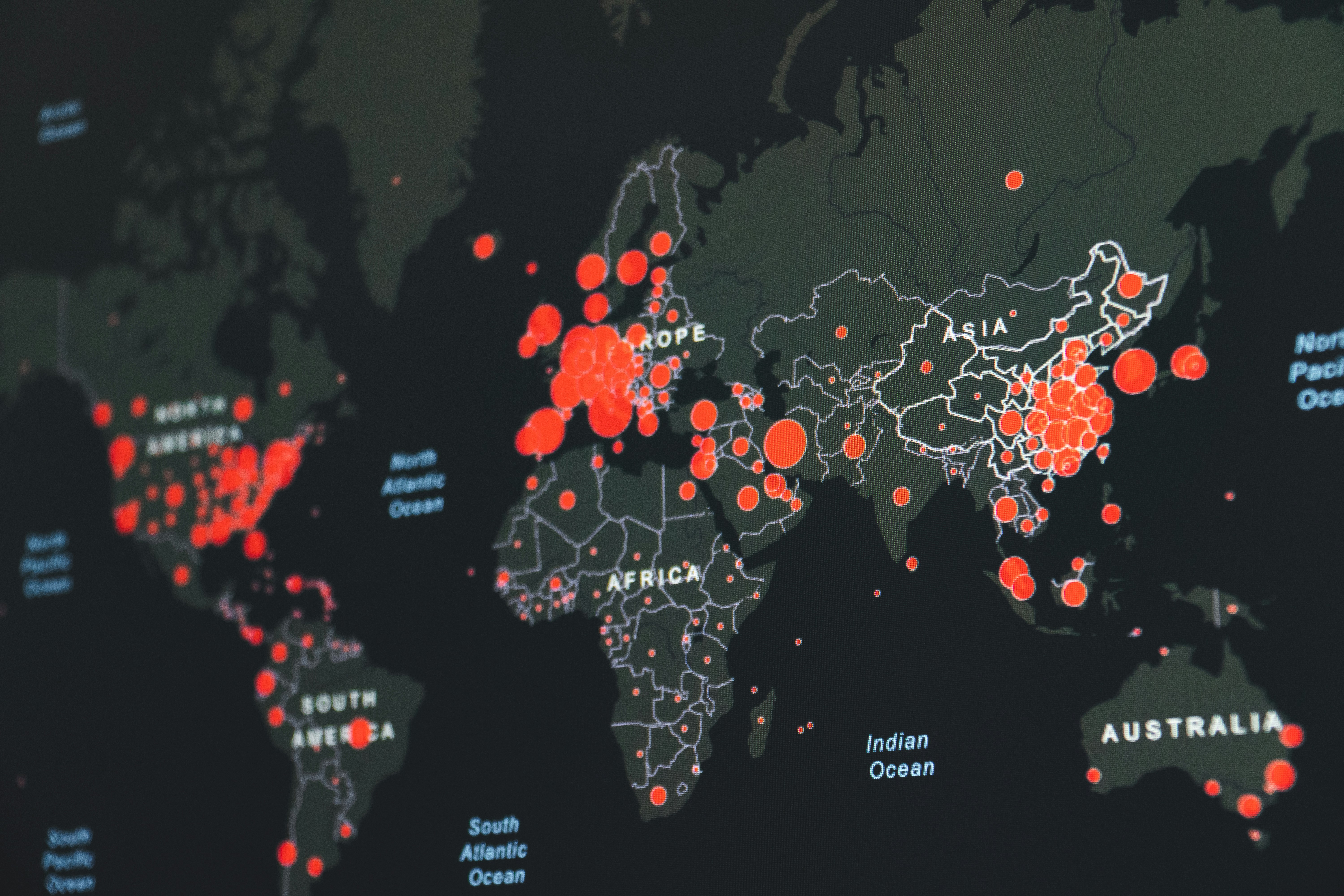
This finding points to a structural problem in global genomic epidemiology. The international databases that define known variants — most significantly GISAID — are heavily weighted toward high-income countries with sophisticated clinical testing and sequencing programs. The UK and US together contribute the majority of globally sequenced SARS-CoV-2 genomes. Countries in Africa, South Asia, and parts of Southeast Asia contribute a fraction.
The consequence is that variants can circulate — and spread — in these under-sequenced populations for weeks or months before being detected, documented, and entered into international databases. When they finally appear in clinical sequencing from a high-income country, they may already be widespread.
Aircraft wastewater surveillance at transit hubs in these under-resourced regions provides a way to capture these circulating variants directly, at the point of international departure, before they disperse globally. Kigali is positioned on transoceanic routes connecting sub-Saharan Africa to Europe and the Middle East. A variant circulating in central Africa would pass through Kigali before appearing in London or Paris.
The 70% that could not be assigned is not a failure of the laboratory. It is a failure of the global database to keep pace with what is actually circulating. Aircraft wastewater is pointing at the gap.
What this means for Thailand and Southeast Asia
The same logic applies to Bangkok. Southeast Asia encompasses countries with varying genomic surveillance capacity. Some have sophisticated national programs; others have minimal clinical sequencing infrastructure. Suvarnabhumi connects to virtually all of them.
A variant circulating in a country with minimal sequencing capacity would be unlikely to appear in GISAID until a traveler carries it to a high-income country with dense clinical surveillance. Unless aircraft wastewater at Suvarnabhumi catches it first.
This is the epidemiological case for placing a high-quality aircraft wastewater surveillance program at Bangkok: not just to protect Thailand from known variants, but to serve as a sentinel that catches the unknowns before they become known — globally and too late.