How AWSS Works
From aircraft lavatory to public health dashboard in under two hours — the science behind a working early-warning system.
Every flight. Every landing.
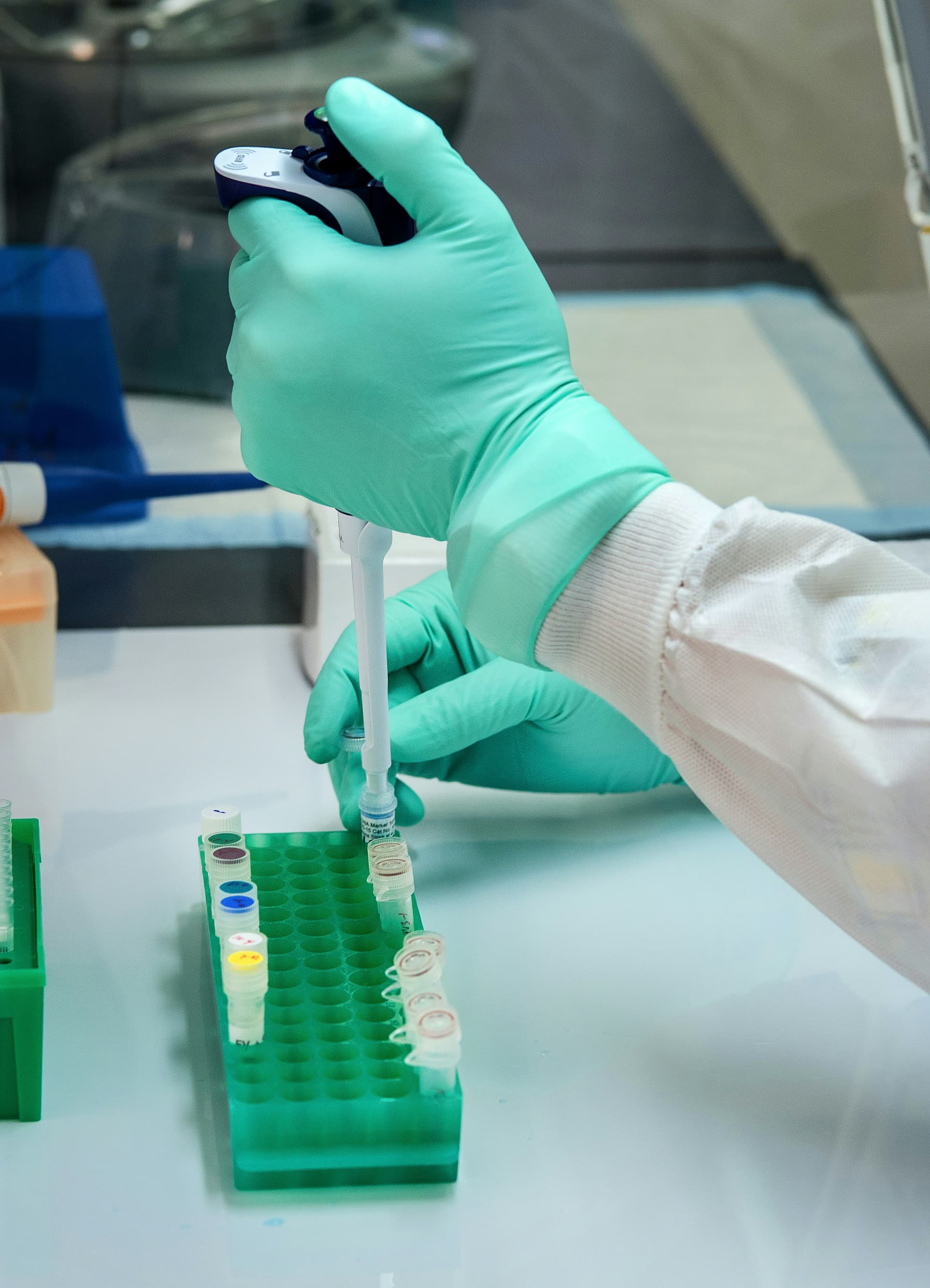
Wastewater samples are extracted from the aircraft lavatory holding tank during routine ground servicing — the same window when fuel, water, and cabin cleaning are happening. The CDC's JFK pilot showed the entire operation adds only about three minutes to normal turnaround time. No passenger interaction. No delay. No queue. One sample represents up to 300 travelers from a single origin.

Laboratory-grade precision. Airport speed.
Samples are transported under cold-chain to our molecular laboratory. RT-qPCR detects target pathogens — SARS-CoV-2, Influenza A & B, Mpox, Cholera, Dengue, Zika, Yellow Fever, MERS-CoV, Measles, Norovirus, and others — with high sensitivity and strict QA/QC protocols. Positive samples are preserved sequencing-ready and forwarded to the National Reference Laboratory for deep genomic analysis.
See the threat before it spreads.
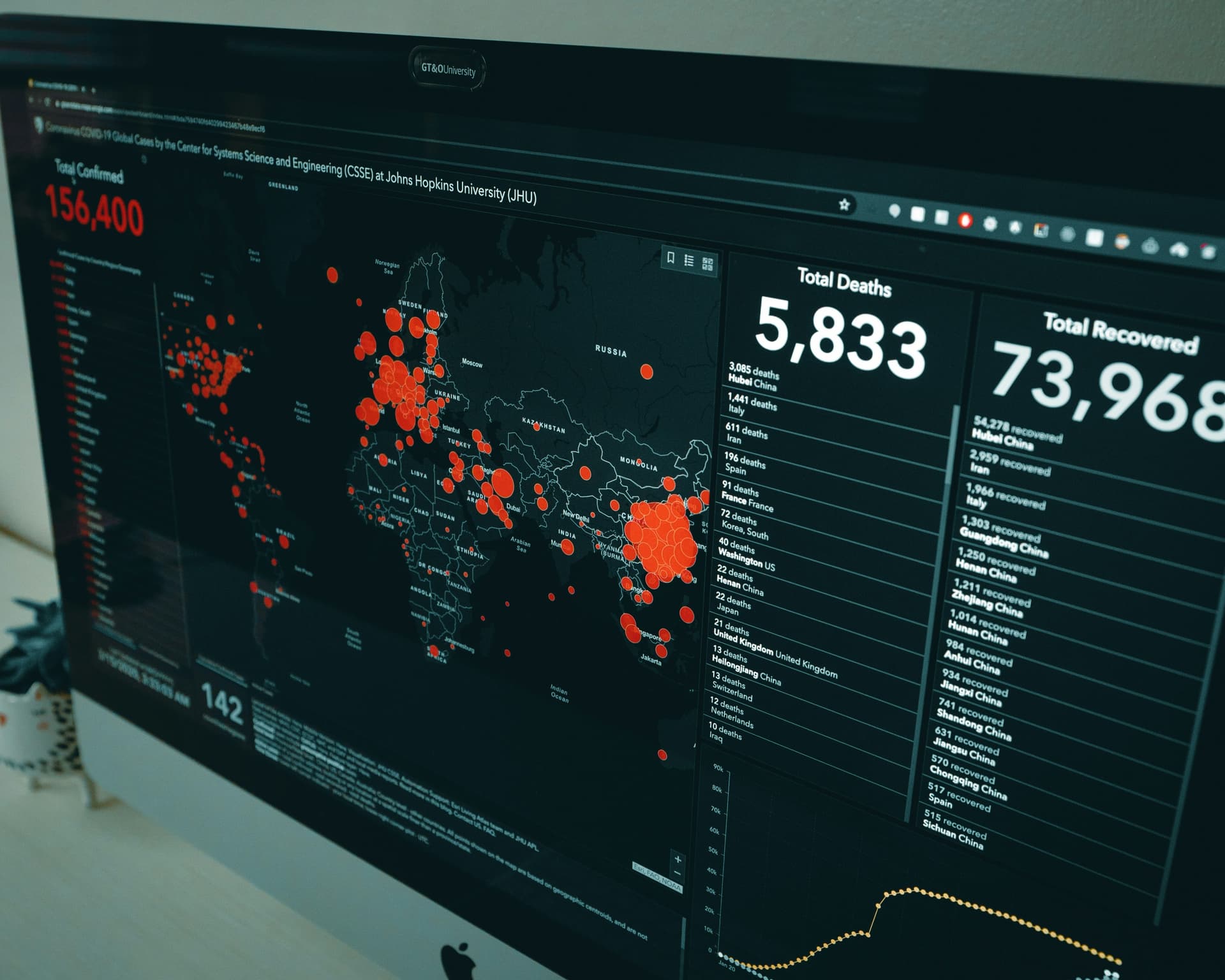
Results are pushed to the AWSS dashboard — encrypted, hosted on government infrastructure, and segmented by flight origin. During active surveillance periods, the dashboard updates in real time. During routine monitoring, results are consolidated and delivered daily. Public health and aviation authorities receive actionable, risk-based intelligence. The result is targeted, evidence-led response — not blanket travel bans, not reactive border closures.
A multi-pathogen surveillance layer.
AWSS panels detect pathogens shed in urine, faeces, and respiratory fluids using validated RT-qPCR assays. The standard panel covers the diseases of highest cross-border relevance. Additional pathogen assays are developed and validated on national request.
Respiratory & systemic: SARS-CoV-2 · Influenza A & B · MERS-CoV · Measles · Mpox
Enteric & tropical: Cholera · Norovirus · Dengue · Zika · Yellow Fever
Airport terminal wastewater: an additional surveillance layer covering connecting passengers, transit travellers, and airport staff — expanding detection sensitivity beyond inbound flights
Extended panels on national request — additional pathogens and antimicrobial resistance markers developed and validated to national requirements
Designed for public health decision-makers.
AWSS is built around how governments actually work — with the operational continuity, privacy obligations, and institutional accountability that national health authorities require. Every design choice serves that audience.
What governments gain
- Population-level intelligence — one sample represents an entire flight, anonymously and without any passenger data
- Weeks of lead time — detect imported threats before they appear in hospitals or community surveillance
- Privacy-compliant by design — no individual identification is possible, no PDPA risk, no consent framework required
- Zero disruption to travel flow — integrated into routine aircraft maintenance, invisible to passengers
Flexible deployment model
- During routine periods — risk-based sampling targets high-priority origin routes, with daily dashboard updates
- During elevated threat — full-coverage sampling activates, with real-time alerts to health authorities
- Scales with your infrastructure — works alongside existing clinical surveillance, not in place of it
- Expandable panels — start with core pathogens, add new targets as national priorities evolve
Proven globally. Ready for Thailand.
Aircraft wastewater surveillance is not experimental. It is operational infrastructure in the US, UK, EU, Singapore, Australia and beyond — sampling hundreds of thousands of flights, detecting variants weeks before clinical surveillance, and now scaling into a coordinated international network.
U.S. CDC — TGS Program
Since 2021, the CDC's Traveler-based Genomic Surveillance (TGS) program has tested over 600,000 travelers and 1,200+ aircraft wastewater samples across 10 major US airports, screening for 30+ pathogens. Published in Emerging Infectious Diseases (2025): detected Omicron sub-lineages up to six weeks before they appeared elsewhere in the US.
Emerg. Infect. Dis. 2025UK–US Bilateral Network
From March 2024 to January 2025, the UK Health Security Agency and US CDC ran the world's first transatlantic bilateral aircraft wastewater monitoring programme — 424 samples, flights in both directions, methods harmonized. The XEC variant was detected in UK-bound flights four weeks before it appeared in US-origin data. Published on medRxiv, 2026.
Bart et al., medRxiv 2026European Commission
In January 2023, the European Commission's Joint Research Centre (JRC) issued formal ad-hoc guidance for EU member states to test wastewater from inbound aircraft. Sweden, Germany, France, and the Netherlands have since operationalized aircraft-level sampling under this framework.
EC JRC Guidance, 2023Australia — Qantas + CSIRO
CSIRO and Qantas detected the Omicron variant in aircraft wastewater from a Johannesburg–Darwin flight, confirmed by sequencing — published in Science of the Total Environment. Foundational evidence that this works on a single onboard infection.
Ahmed et al., Sci. Total Environ. 2022