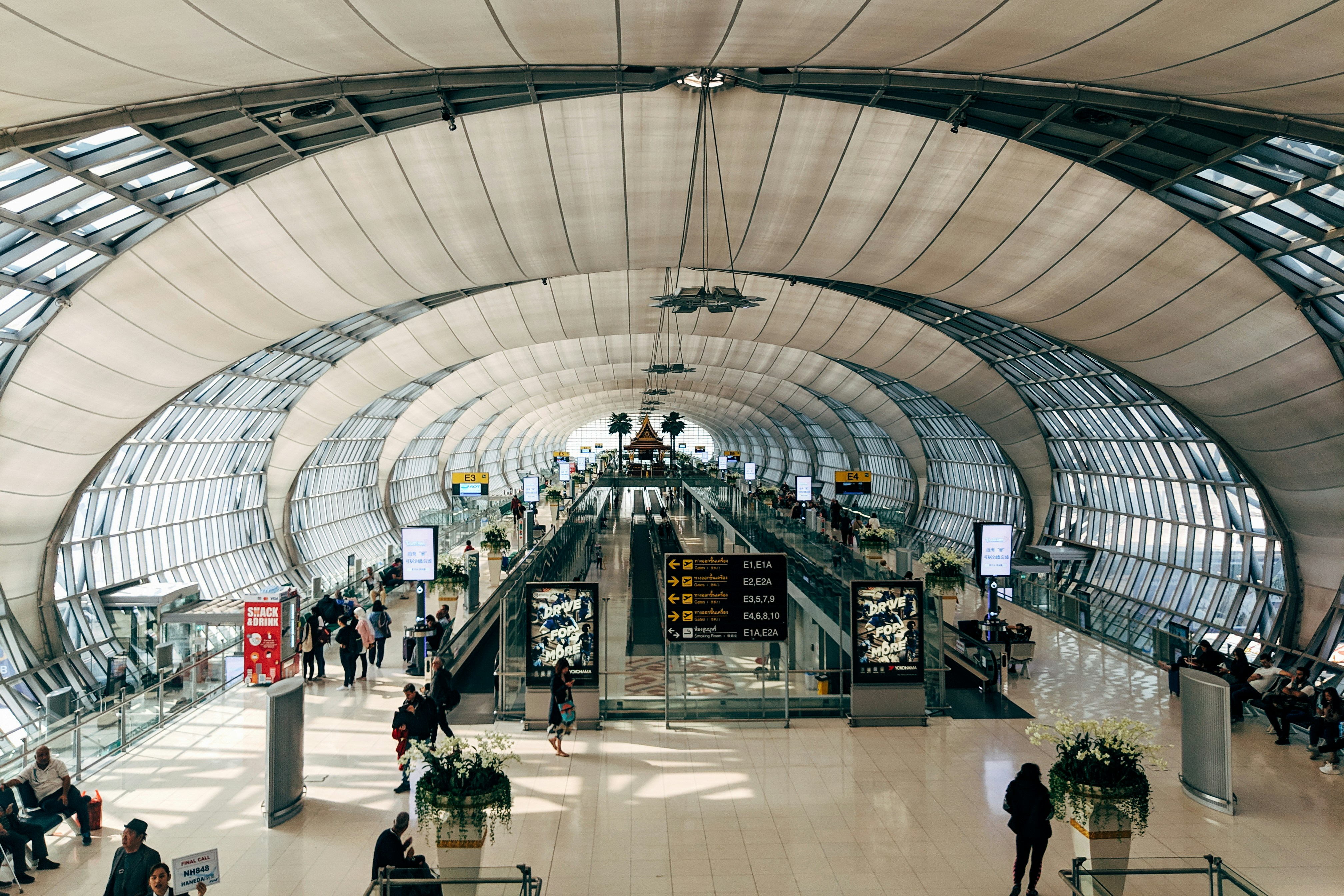
For Thailand, the most compelling evidence for aircraft wastewater surveillance does not come from JFK or Brussels or Berlin. It comes from Changi.
Singapore's Changi Airport is the closest operational analogue to Suvarnabhumi in the Southeast Asian context: a major international hub, processing passengers from across Asia, the Middle East, and beyond, with a similar inbound demographic mix and adjacent position in the region's aviation network. When researchers from Singapore's National Environment Agency and National University of Singapore studied aircraft and airport wastewater at Changi, the results are as close to a direct precedent for Thailand as the published literature provides.
The study design
Researchers assessed 18 different pathogens across inbound medium- and long-haul flights at Changi Airport, using Next Generation Sequencing (NGS) and quantitative PCR on aircraft lavatory wastewater and airport terminal sewage simultaneously [1]. This parallel design allowed a direct comparison between the two signal types at the same airport, at the same time.
The pathogen panel included SARS-CoV-2, influenza, RSV, and several gastrointestinal pathogens — one of the broadest multi-pathogen surveillance panels applied to aircraft wastewater in an Asian context.
The key findings
Aircraft wastewater outperformed terminal wastewater. The study found that aircraft lavatory wastewater yielded a significantly higher proportion of SARS-CoV-2-positive samples and higher average viral loads compared to samples from the broader airport terminal sewage system [1]. This is consistent with what the physics predicts: aircraft wastewater is concentrated blackwater from a defined passenger population; terminal wastewater is mixed with building effluent and far more diluted.
2 to 5 days of lead time. Cross-correlation analysis revealed that viral load trends detected in the airport environment — particularly in the aircraft-level samples — preceded local community COVID-19 case surges by 2 to 5 days [1].
This is the number that matters most for operational planning. Not weeks — days. In a busy international hub, 2 to 5 days is the difference between a clinical system that sees elevated incidence as it is already spreading, and a public health authority that receives an alert and has time to communicate with healthcare providers, adjust clinical guidance, or initiate targeted surveillance in high-risk populations.
Why 2-5 days is operationally significant
The intuitive reaction to a 2-5 day lead time might be underwhelming: "Only a few days?" In public health terms, however, a consistent 2-5 day early warning is extremely valuable.
Consider the cascade of events that a COVID-19 wave typically triggers. Cases rise in the community. Primary care sees elevated respiratory presentations. The signal reaches hospital admission monitoring. Clinical laboratories confirm the pattern. Public health authorities are notified. A response is mounted.
This cascade typically takes 5 to 10 days from when community transmission is actually rising to when a coordinated response is deployed. A 2-5 day upstream signal from airport wastewater means the response can begin before the cascade completes — before the clinical system is already overwhelmed.
The ASEAN precedent
Changi handles passengers from throughout Southeast Asia, South Asia, East Asia, and the Middle East — the same mix that flows through Suvarnabhumi. The variants circulating at Changi are likely the same or similar to those arriving at Bangkok, because the two airports share much of their source population.
What Singapore demonstrated at Changi is not just a scientific finding. It is an operational proof-of-concept for the adjacent airport that Thailand operates. The pathogen biology, the passenger demographics, the airport characteristics, and the regional epidemiology all transfer.
Changi proved the concept. Suvarnabhumi is where the concept becomes policy. The 2-5 day advantage exists at Bangkok too — it just has not been measured yet, because the system does not yet exist.
Pathogen detection beyond COVID
Beyond SARS-CoV-2, the Changi study detected nine additional pathogens beyond those initially targeted [1] — demonstrating in the Asian transit hub context that the multi-pathogen potential of aircraft wastewater is real and not limited to respiratory viruses.
This is the scope that AWSS is designed to capture: not a COVID-specific system that becomes obsolete as COVID evolves, but a standing multi-pathogen surveillance infrastructure that detects whatever the passengers are carrying — today, next year, and into the next decade of global health.