One of the most common questions we get is: which diseases can your system actually catch? The honest answer is broader than most people expect — and the technology is moving toward broader still.
The basic principle
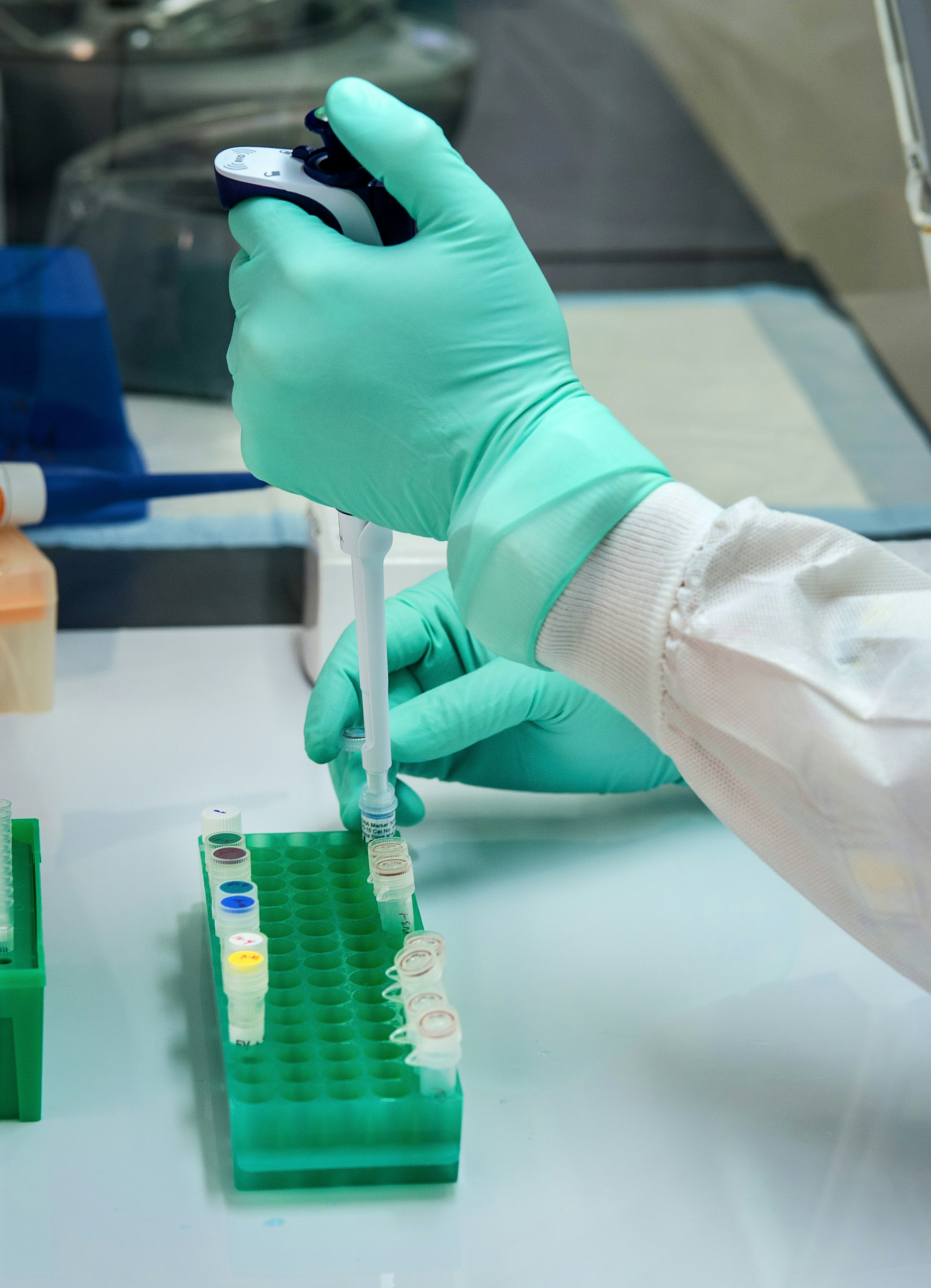
Aircraft wastewater contains everything passengers excrete on a flight. Many infectious pathogens are shed in stool, urine, or respiratory fluids that end up in the lavatory tank. When the lab runs RT-qPCR or sequencing on the wastewater concentrate, it can detect the genetic material of any pathogen for which an assay has been developed.
This means the technology generalizes. The same wastewater sample that tests for SARS-CoV-2 can also test for influenza, RSV, Mpox, Shigella, antimicrobial-resistance markers, and dozens of other targets. The constraint is not biology — it is which assays are validated and which targets a national authority prioritizes.
What is currently in operational panels
The US CDC's TGS panel expanded to 30+ pathogens in October 2023, and the operational record shows detections across four major categories [1, 2]:
Respiratory viruses
This is the most mature category, with the strongest published evidence:
- SARS-CoV-2 — including all major variants (Alpha, Beta, Gamma, Delta, Omicron and sub-lineages). The CDC TGS program has documented variant-specific detections weeks before clinical surveillance picked them up domestically.
- Influenza A and B — detected in early multi-pathogen testing of US flights.
- Respiratory Syncytial Virus (RSV) — increasingly included in panels because it disproportionately affects infants, elderly, and immunocompromised travelers.
- Mycoplasma pneumoniae — included in expanded panels; relevant because of the recent global surge in pediatric Mycoplasma cases.
Enteric (gastrointestinal) pathogens
Aircraft wastewater is, structurally, an ideal sample for enteric pathogens — the things people pass through the toilet. Operational detection records include:
- Shigella — detected in New Zealand aircraft wastewater. Highly contagious bacterial dysentery; a frequent issue in long-distance travel.
- Salmonella — food-borne and water-borne; relevant for foodservice and hospitality.
- Norovirus (GI and GII) — the dominant cause of acute gastroenteritis outbreaks; transmitted easily on cruise ships and aircraft.
Emerging and re-emerging threats
This is where the policy relevance of aircraft wastewater is increasing fastest:
- Mpox (formerly monkeypox) — included in South Korea's airport and port wastewater system, with positive samples forwarded for genomic confirmation since September 2024 [3].
- Measles — community wastewater detection is now operational in multiple jurisdictions; aircraft-level screening is the logical next step given the 2025 measles surge.
- Adenovirus — detected in New Zealand aircraft wastewater. Adenovirus is capable of causing severe respiratory failure in vulnerable populations.
- Candida tropicalis — an opportunistic fungal pathogen dangerous to immunocompromised individuals, detected in New Zealand aircraft wastewater research.
- Poliovirus — Poland investigated airport sewage for poliovirus importation from 2017 to 2020, showing environmental surveillance at airports can detect emerging polioviruses [4].
Antimicrobial resistance markers
This is the category most relevant for long-term public-health intelligence:
- ESBL (extended-spectrum beta-lactamases) — markers of cephalosporin resistance.
- Carbapenemase genes — markers of carbapenem resistance, the last-line antibiotics.
- mcr genes — markers of colistin resistance.
These are not "outbreak" detections in the conventional sense. They are surveillance signals showing how resistance genes are moving across borders — information that has been historically very hard to obtain at scale.
The point of a 30-pathogen panel is not that every flight will be positive for everything. It is that when one rare signal appears — a previously unknown variant, a regional measles import, a carbapenem-resistance gene from a new geography — the system catches it and tells you where it came from.
What custom panels can include
National authorities can request additions or modifications. For Thailand specifically, the panel should reflect:
- Department of Disease Control priorities — including any pathogens currently designated as priority surveillance targets under the Thai Communicable Diseases Act.
- Regional epidemiology — pathogens currently circulating in Southeast Asian source countries that justify monitoring at BKK and other Thai gateways.
- CAPSCA recommendations — the ICAO collaborative public health framework relevant to points of entry.
- WHO priority pathogens — including pandemic potential pathogens flagged under the WHO 10-year Global Genomic Surveillance Strategy (2022–2032).
What the technology cannot detect
To stay honest:
- Pathogens not shed in wastewater. Some bloodborne pathogens (HIV, Hepatitis C, certain hemorrhagic fevers) are not reliably detectable in lavatory wastewater because they are not excreted in sufficient quantity.
- Bioterror agents in sealed containers. AWSS detects what humans excrete. It does not detect intact agents being carried as cargo.
- Non-microbial threats. Chemical hazards, radiological materials, and engineered non-replicating agents are outside the scope of microbial wastewater surveillance.
These limits should be stated clearly. Aircraft wastewater surveillance is a specific tool for a specific class of threats. Pretending otherwise weakens the credibility of the legitimate use case.
The trajectory
The expansion of aircraft wastewater panels has been steady and is accelerating. Operational programs that started with single-target SARS-CoV-2 detection in 2021 are now running 30+ target panels with sequencing follow-up. The 2023 Lancet Global Health viewpoint explicitly framed the technology as a platform — not a single-disease tool — for the next decade of pandemic preparedness [5].
For Thailand, the practical question is which subset of this expanding capability to deploy first. Our recommended starting point is a panel covering all WHO priority respiratory and enteric pathogens, with AMR markers added in year two and full sequencing capacity for any positive sample from day one. That gives the Department of Disease Control real intelligence on day one and a foundation that scales for the next decade.